
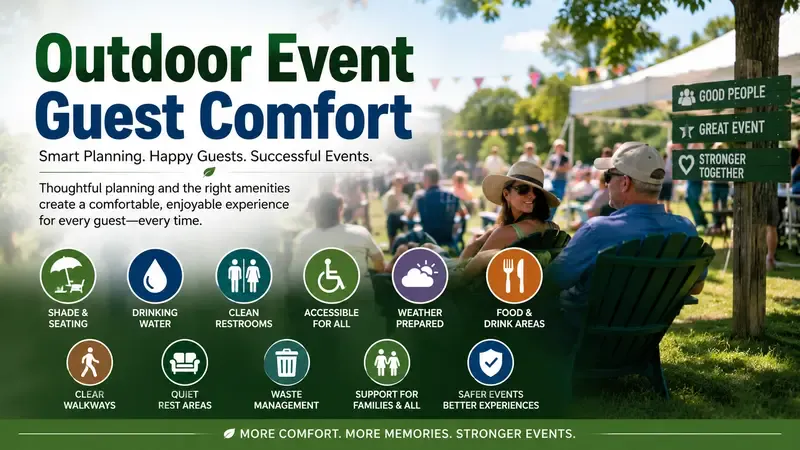
There is a lot to consider when planning an outdoor event that lasts all day long. Temperature fluctuations, direct sunlight, seating capacity, overcrowding, restroom requirements, and surprise weather changes can impact the guest experience. Guests can stay cool and comfortable all day long with the shade, comfortable seating, drinking water, clean restrooms, accessible walkways, and appropriate food areas.
Other dimensions of good outdoor event guest comfort planning are weather preparedness, waste management, quiet rest areas and clear site organization. Organizing from the eyes of the guests allows organizers to be aware of potential issues before they arise and to make the event safer, more convenient and fun for everyone.
Provide Enough Shade
There is a growing need for shade as visitors spend more time outdoors. Any temperature can be uncomfortable if spent in direct sunlight for a long time. Shade relief can be created with tents, canopies, mature trees, covered pavilions, and shaded seating areas. The planners need to take into account where the sun is in the day, as a morning sunlit area may be completely sunlit by afternoon.
Shade should be spread out throughout the site rather than focused in one area that will quickly become overpopulated.
Offer Varied Seating Options
Not all visitors may be able to stand or sit on the ground for extended periods. Ensure there is ample seating for older people, families, visitors with mobility issues, and break-takers at all-day events. An assortment of chairs, benches, picnic tables, and non-rigid seating can cater to various needs. Seating areas should be kept near food areas, activities, restrooms, and shaded areas.
Planners should also allow for clear pedestrian access around tables and seating for wheelchairs, strollers, and mobility devices.
Make Drinking Water Easy to Find
It is important to have access to drinking water at outdoor events. You need to actively remind guests to drink water before they feel thirsty, especially if they are drinking alcohol, exercising, or in warm weather. Water stations should be easily identified and located in different accessible locations. Depending on the event format, there are a variety of options that can be used, including reusable water containers, bottled water, and fonts that are labelled for drinking.
Supplies need to be checked throughout the day, and ice, cups, or water should be replenished before stations are empty.
Plan Restroom Capacity Carefully
Planning for restrooms should consider the length of the event, number of attendees, food and beverage requirements, and guest types. Larger events often result in more usage and increased cleaning and service demands. Facilities should be situated so that visitors can access them without having to walk too far or cross restricted areas. Another company rents Porta Johns, which event planners can consider for temporary sanitation and can be obtained via their website.
Clear signage and provision for hand washing/sanitising and accessible units as necessary should also be provided in restroom spaces.
Consider Temperature Changes
The daily temperature on the outside can vary from morning to evening. For all events, include all event periods (not just the forecasted daytime high). Fans, misting stations, shaded rest areas, and cold water are all ways to help if it’s hot. Cooler events may feel more comfortable when there are coolers, wind barriers, blankets, or covered areas for events.
If guests are being transported, they should be warned in advance of environmental conditions and be prepared to bring the necessary clothing, sunscreen, or rain gear.
Create Comfortable Food Areas
Food service areas tend to be natural focus points, causing crowding, long lines, and not enough seats. Planners need to allow adequate queue length for visitors without blocking any main walkways. Eating areas are shaded, provide waste disposal, have hand cleaning facilities, and have tables that can be cleaned throughout the day. Food vendors also need sufficient service space to avoid deliveries and restocking interfering with guests.
Clearly marking food lines from beverage stations can help ease traffic during mealtime.
Keep Walkways Clear and Stable
Avoid having to manoeuvre equipment, cords, supplies, and uneven surfaces within the event. The main routes ought to be linked to parking, entry, seating, restrooms, food areas, and activity areas. Grass, gravel, mud, and slopes may cause problems for wheelchairs, strollers, or guests with a mobility challenge. In high-traffic areas, temporary flooring, mats, ramps or alternate routes may be necessary.
Site inspection helps to prevent bigger issues that may arise from spills, loose materials, or damaged surfaces.
Include Quiet Rest Areas
Several hours of music, crowds, games, and announcements can get monotonous. A quiet section will provide guests with a quiet space to relax without leaving the event. These spaces can be used in the right location, away from loud equipment and speakers, and still be within reach so guests can feel connected. Restrooms, shade, and water will make the area more functional. Families with young children, older guests, and noise- and crowd-sensitive visitors may find quiet zones beneficial.
Manage Waste Throughout the Day
When garbage bins are full, they can drastically impact comfort and style. Waste stations should be located close to food service areas, seating, exits, and other high-traffic areas. Containers should be emptied before they fill up, and liners should be changed regularly by event staff. When appropriate, and if supported by the venue and local collection system, recycling and composting stations can be added. Regular collection minimises litter, odours, insects, and post-event clean-up.
Prepare for Rain and Wind
A weather response plan must be realistic for outdoor events. Rain can cause muddy roads, wet seats, slippery surfaces, and overcrowded shelter areas, and wind can affect tents, signs, decorations, and light materials. Properly secure structures and know what areas need to be cleared when conditions become unsafe. Covered areas must be large enough to cover the majority of those participating. Providing weather protocols to vendors and staff can help the event to react swiftly, instead of improvising on the spot.
Support Families and Guests with Special Needs
When planning for all-day outdoor events, it is important that they are accessible for families, older people, and people with disabilities to move around and access facilities. Provide access routes, seating, stroller-friendly routes, changing facilities, and accessible restrooms as needed. Ensure that important facilities are easy to find and are easily marked, and do not put obstacles on main walking routes.
Quiet areas can also be used by families with children and/or guests who need to step away from the crowds and noise. Staff at the event should be knowledgeable about the facilities that are on site and how to provide support. Inclusive planning increases access and the enjoyment of the event from the start, allowing greater numbers of people to attend during the day as they feel able. For more information, visit my website, worldcelebritiesbio.
Conclusion
The comfort of guests is a key factor in successful full-day outdoor event planning. Some basic amenities like shade, seating areas, drinking water, clean restrooms, accessible walkways, protection from the weather, food areas, and waste disposal can go a long way toward how it feels. Families, older adults, and guests with special needs should also have quiet areas and practical facilities available at the event.
Plans created from the viewpoint of the guest, and a visual inspection of the site throughout the event, can help planners determine if there are problems that could impact participants. A well-planned outdoor event ensures that visitors will be comfortable and safe, enjoy the activities provided, and leave with a good impression. With careful preparation, the experience will be better for the guests and the event staff.