
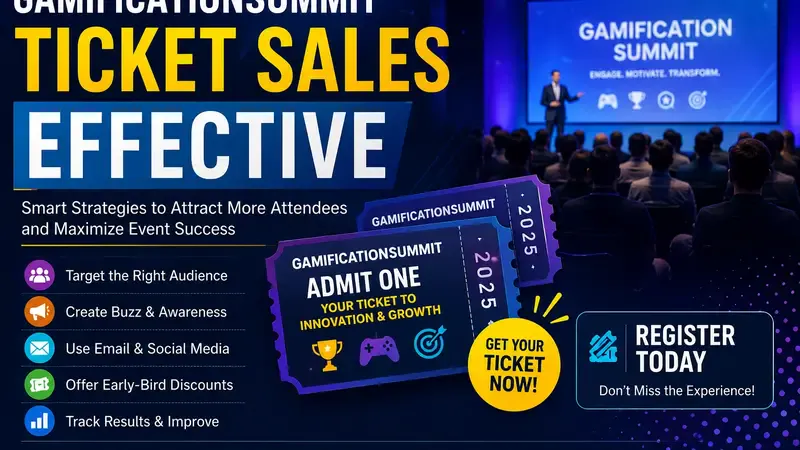
Effective ticket sales are essential for building a successful gamification summit and attracting the right audience. The keyword gamificationsummit ticket sales effective focuses on practical strategies that can help event organizers increase registrations, create excitement, and improve the overall ticket-buying experience. A well-planned sales campaign starts by understanding the target audience and clearly communicating the value of attending the summit.
Organizers can use early-bird offers, engaging social media content, email marketing, speaker promotions, testimonials, and group registration packages to reach more potential attendees. A professional event landing page with clear ticket options, event details, benefits, and a simple checkout process can also encourage visitors to complete their purchases.
Tracking important metrics such as ticket conversions, website traffic, email engagement, and promotional performance helps organizers understand what works best. By combining effective marketing with genuine value and convenient registration, a gamification summit can build stronger interest, increase ticket sales, and create lasting engagement with its audience.
What Makes Gamificationsummit Ticket Sales Effective?
Effective ticket sales usually begin with a clear understanding of the target audience. People are more likely to purchase a ticket when they understand how an event can benefit them professionally or personally.
A strong ticket campaign should answer several important questions:
- What is the event about?
- Who should attend?
- What will attendees learn?
- Who will they meet?
- What makes the event different?
- What does the ticket include?
- When should they register?
Clear answers reduce uncertainty and help potential attendees decide faster.
Understand Your Target Audience
Before launching a ticket campaign, organizers should identify their ideal attendees. A gamification-focused summit may attract professionals from several industries, including technology, marketing, education, human resources, product development, design, and business.
Different audiences may respond to different messages.
For example, a marketing professional may be interested in customer engagement, while an HR professional may want to discover new ways to improve employee participation and training.
Segmenting the audience allows organizers to create more relevant campaigns instead of using one general message for everyone.
Highlight the Value of Attending
One of the most important parts of ticket marketing is communicating value.
Potential attendees need to understand what they will gain from the event. Instead of simply listing sessions, explain the practical benefits.
An event may provide opportunities to:
- Learn new gamification strategies
- Discover industry trends
- Meet professionals
- Explore innovative ideas
- Attend educational sessions
- Exchange experiences
- Build professional connections
- Discover new technologies
The more clearly these benefits are communicated, the easier it becomes for visitors to justify the cost of a ticket.
Create Attractive Early-Bird Offers
Early-bird tickets can encourage people to register before the event gets closer. A lower introductory price creates a clear incentive for people who are already interested.
For example, organizers can divide ticket sales into different stages:
| Ticket Type | Main Purpose |
|---|---|
| Early Bird | Generate initial registrations |
| Standard | Continue regular sales |
| Final Release | Encourage last-minute decisions |
| VIP | Provide premium benefits |
Each stage should have clearly communicated prices and deadlines.
Using genuine deadlines is important. Visitors should understand when a price will change rather than seeing confusing or misleading offers.
Read More About: Eleanor June Goosby
Build a High-Converting Ticket Page
The event website or landing page is often where interest becomes a purchase. A poorly organized page can cause visitors to leave before completing registration.
A strong ticket page should clearly display:
- Event name
- Date and location
- Main event description
- Speakers
- Agenda or session highlights
- Ticket prices
- Attendee benefits
- Registration button
- Payment information
- Frequently asked questions
Make the registration button easy to find. Visitors should not have to navigate through several pages before reaching checkout.
Use Social Media Marketing
Social media can significantly increase awareness of an upcoming event. However, organizers should avoid posting the same ticket advertisement repeatedly.
Instead, create different types of content throughout the campaign.
Useful content can include:
Speaker Announcements
Introduce speakers individually and explain what attendees can expect from their sessions.
Session Previews
Share short previews of important topics or workshops.
Behind-the-Scenes Content
Show preparations, venue arrangements, team activities, or highlights from previous events.
Attendee Testimonials
Share genuine feedback from previous participants when available.
Countdown Posts
Remind followers about registration deadlines and ticket-price changes.
This variety keeps the campaign interesting while repeatedly directing interested people toward registration.
Encourage Speakers to Promote the Event
Speakers can help expand an event’s reach because they already have their own professional audiences.
Organizers can provide speakers with promotional materials, including:
- Social media graphics
- Event descriptions
- Registration information
- Speaker announcement templates
- Short promotional videos
When several speakers promote the event to their own audiences, the summit can reach people who may not have discovered it through the organizer’s channels.
Use Email Marketing
Email marketing can help convert people who have already shown interest.
Rather than sending one generic message, organizers can develop a simple sequence.
Email 1: Event Announcement
Introduce the event and explain why people should consider attending.
Email 2: Event Benefits
Highlight key sessions, networking opportunities, and learning outcomes.
Email 3: Speaker Spotlight
Introduce an important speaker and their expected contribution.
Email 4: Ticket Deadline
Remind subscribers that early-bird pricing is ending.
Email 5: Final Registration
Create a final reminder for people who have not yet registered.
This approach keeps potential attendees informed without relying on a single promotional message.
Create Genuine Urgency
Urgency can encourage people to stop postponing their purchase. However, it should be based on real deadlines or limitations.
Examples include:
- Early-bird pricing ending
- Registration closing
- Limited workshop capacity
- VIP tickets becoming unavailable
- A specific registration deadline
Clear and honest communication builds more trust than artificial scarcity.
Make the Registration Process Simple
A complicated checkout experience can reduce conversions even when people are interested in attending.
The registration process should be:
- Easy to understand
- Mobile-friendly
- Fast
- Secure
- Transparent about pricing
- Simple to complete
Organizers should test the registration process before launching the main campaign. Checking the experience on smartphones, tablets, and computers can help identify potential problems.
Offer Group Registration
Group ticket packages can be useful for businesses, educational organizations, agencies, and professional teams.
For example, an organizer could offer discounted pricing when several people register together. This can encourage companies to send multiple employees rather than purchasing only one ticket.
Group packages can also increase networking opportunities because attendees arrive with colleagues while still connecting with other participants.
Use Testimonials and Social Proof
People often trust other attendees’ experiences more than promotional claims.
If previous events have received positive feedback, organizers can display selected testimonials on the ticket page.
Useful social proof may include:
- Attendee reviews
- Speaker feedback
- Event photographs
- Previous attendance figures
- Partner information
- Media coverage
- Professional endorsements
The information should be authentic and verifiable.
Retarget Interested Visitors
Not everyone who visits an event website will purchase a ticket immediately. Some people may need more time to decide.
Where appropriate and implemented in a privacy-compliant way, retargeting campaigns can remind previous website visitors about the event.
For example, someone who visited the ticket page but did not complete registration could later see an advertisement reminding them about an upcoming registration deadline.
Track Ticket Sales Performance
Organizers should measure campaign performance instead of relying on assumptions.
Important metrics include:
| Metric | Purpose |
|---|---|
| Total ticket sales | Measures overall demand |
| Conversion rate | Shows how effectively visitors become buyers |
| Website traffic | Measures campaign reach |
| Email clicks | Measures subscriber interest |
| Social engagement | Identifies successful content |
| Cost per registration | Measures advertising efficiency |
| Early registrations | Shows initial demand |
These numbers can reveal which promotional channels deserve more attention.
Improve the Campaign Based on Data
Ticket marketing should not remain unchanged throughout the campaign.
If social media produces strong engagement but few registrations, organizers may need to improve the landing page or registration offer.
If email generates many sales, additional email content may be useful.
If a particular speaker attracts significant traffic, organizers can create more content around that speaker or session.
Data allows organizers to make informed decisions rather than guessing what potential attendees want.
Use Content Marketing
Content marketing can build interest before people are ready to purchase a ticket.
Organizers can publish articles, interviews, videos, guides, and social posts related to gamification and event topics.
For example, content could discuss:
- Gamification trends
- User engagement strategies
- Game-based learning
- Employee motivation
- Customer loyalty
- Interactive experiences
- Emerging technology
This content can attract people searching for relevant information and introduce them to the summit naturally.
Keep Event Information Consistent
Inconsistent information can create confusion.
The event’s website, social media pages, email campaigns, advertisements, and registration platform should provide matching information about:
- Dates
- Location
- Ticket prices
- Speakers
- Registration deadlines
- Event schedule
Updating all channels whenever important details change helps maintain trust.
Build Momentum Before the Event
Successful ticket campaigns often start well before the event date.
Organizers can create a promotional timeline that gradually increases awareness.
Early Stage
Focus on event awareness and announce registration.
Middle Stage
Highlight speakers, sessions, benefits, and testimonials.
Final Stage
Focus on deadlines, remaining ticket options, and important reasons to attend.
This progression gives potential attendees multiple opportunities to discover and evaluate the event.
Common Ticket-Selling Mistakes to Avoid
Even a well-planned event can struggle with ticket sales if you make basic mistakes.
Common problems include:
- Unclear event benefits
- Complicated registration
- Weak landing-page design
- Too little promotional content
- Poor audience targeting
- No clear ticket deadline
- Inconsistent event information
- Ignoring mobile users
- Failing to track campaign results
Avoiding these problems can make the entire ticket-buying journey easier.
Frequently Asked Questions
What does gamificationsummit ticket sales effective mean?
It refers to strategies and methods used to improve ticket sales for a gamification summit by increasing awareness, communicating event value, and making registration easier.
How can a gamification summit increase ticket sales?
Organizers can use early-bird pricing, social media marketing, email campaigns, speaker promotion, testimonials, group packages, and a well-designed registration page.
Why is early-bird pricing useful?
Early-bird pricing gives interested attendees an incentive to register earlier and can help organizers generate initial ticket sales and event momentum.
How important is the event landing page?
It is extremely important because potential attendees often use the landing page to evaluate the event before purchasing. Clear information and an easy checkout process can improve the buying experience.
Can speakers help sell event tickets?
Yes. Speakers can promote the event to their existing professional audiences and introduce the summit to people who may not otherwise discover it.
How should organizers measure ticket-sales success?
They can track registrations, conversion rates, website traffic, email engagement, social-media performance, advertising costs, and sales by promotional channel.
Final Thoughts
The gamificationsummit ticket sales effective strategy should focus on creating value, reaching the right audience, and making registration as simple as possible. Effective promotion involves more than advertising ticket prices. Organisers need to explain why the summit matters and what attendees can gain from participating.
Early-bird offers, social media campaigns, speaker promotion, email marketing, testimonials, group packages, content marketing, and performance tracking can all strengthen a ticket campaign.
Most importantly, organisers should continually evaluate their results and adjust their strategy based on audience behaviour. A clear message combined with a smooth registration experience can turn event awareness into meaningful ticket sales and help create a stronger, more successful summit. For more, click here.