
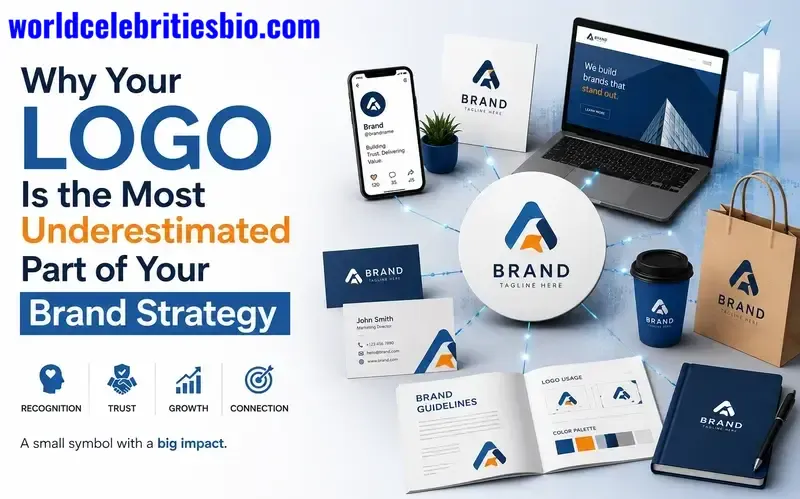
Most small business owners treat their logo as a checkbox, something to sort out once, file away, and forget about. In practice, a logo does far more work than that. It appears on every piece of communication your business puts into the world: your website, your social media profiles, your invoices, your packaging, and your email signature. In many cases, it is the first thing a potential customer sees before they read a single word about what you actually do.
That is a significant amount of weight for a single visual element to carry, and it is why getting it right matters more than most people initially assume.
What a Logo Actually Communicates
A logo does not just identify a brand. It signals something about the nature of the business behind it. Colour choices, typography, and the balance between simplicity and detail – all of these convey information to the viewer before any conscious evaluation takes place.
A logo that looks outdated, generic, or inconsistent with the rest of a brand’s visual identity communicates something about the business even if that communication is unintentional. Customers make fast judgements about credibility, professionalism, and trustworthiness based on visual cues, and the logo is one of the primary inputs in that process.
Conversely, a logo that is clean, distinctive, and well-matched to the brand’s tone communicates competence and intentionality. It signals that the business behind it takes its own presentation seriously, which, for many customers, is a proxy for how seriously it takes everything else.
The Common Mistakes Small Businesses Make with Logo Design
The most frequent mistake is prioritising cost to the exclusion of quality. A logo sourced from a generic template library or produced without any strategic thinking about the brand tends to look exactly like what it is: generic and unmemorable. It may serve as a placeholder, but it rarely serves as a brand asset.
The second common mistake is inconsistency. A logo that looks different across different platforms – stretched on Facebook, cropped on a website header, distorted on a printed product – actively erodes the brand recognition that a consistent visual identity is supposed to build. Logos need to work across a range of formats, sizes, and backgrounds, which not all design approaches account for.
The third mistake is designing for the moment rather than the long term. A logo that references a current visual trend can feel dated within a few years, requiring a rebrand that takes time and creates continuity issues. The strongest brand logos tend to be rooted in simplicity and clarity rather than trend-driven styling.
How Modern Tools Have Changed Logo Design for Small Businesses
The practical barrier to getting a quality logo has changed significantly. Browser-based design tools have made it possible for business owners without a design background to access professional-quality templates, typography, and icon libraries and produce results that would previously have required hiring a designer.
Adobe Express, for example, offers free logo design with a modern, professional look through a logo maker that generates customised options based on your brand name, industry, and visual preferences. The outputs are available in high-resolution PNG and JPG formats suitable for both digital and print use, and they can be uploaded to a brand kit that applies the logo consistently across future design work.
For small businesses that need a polished starting point without a large design budget, this kind of tool represents a genuine shift in what is accessible at the early stages of building a brand. For more information about world celebrities, visit my website worldcelebritecbio.
Consistency Is the Long Game
A logo is only as valuable as the consistency with which it is applied. Once a logo is established, the work is maintaining it, ensuring that every piece of content, every platform, and every communication uses it correctly and in a way that reinforces rather than fragments the brand identity being built.
The businesses that build strong brand recognition over time are not necessarily the ones with the most elaborate logos. They are the ones that show up consistently, look the same wherever they appear, and give customers enough repeated visual exposure to make the brand genuinely memorable. A logo is the foundation that makes all of that possible.